
Introduction
Understanding the classification of government positions into Groups A, B, C, and D is essential for navigating relevant opportunities in the public sector. This breakdown clarifies the hierarchy, responsibilities, and eligibility—helping you align your qualifications with the right role. Plus, stay tuned for the latest Sarkari Exam Updates to help you stay ahead in your job search.
Key Highlights
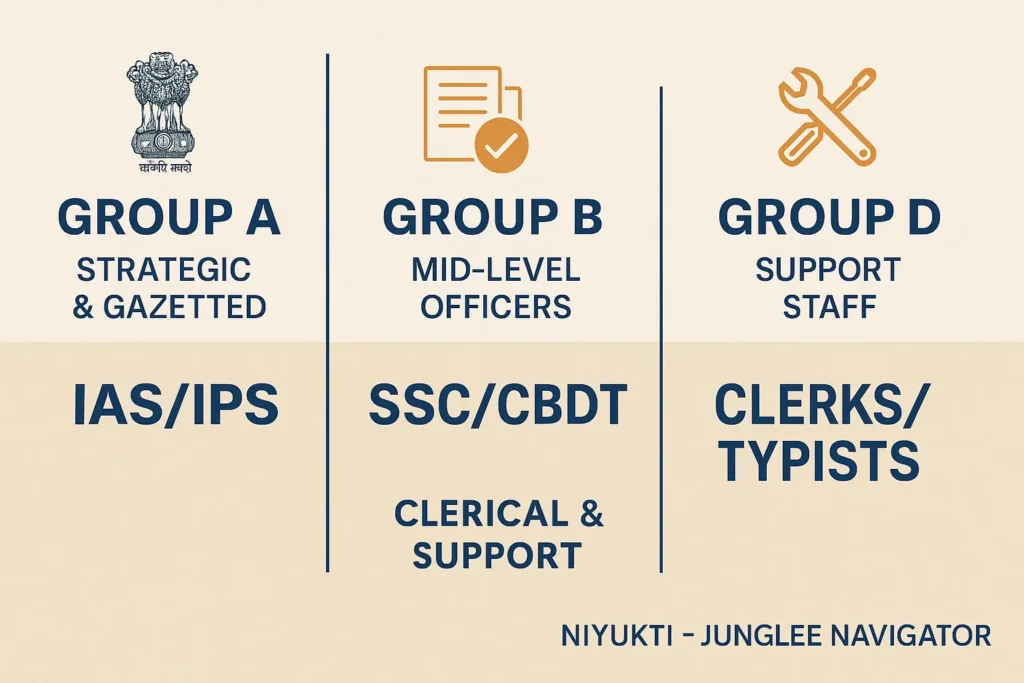
| Group | Role & Responsibility | Examples |
|---|---|---|
| Group A | Gazetted officers involved in policymaking, administration, strategic planning | IAS, IPS, senior civil service positions |
| Group B | Mid-level officers (gazetted and non-gazetted), assisting Group A, executing administrative tasks | Section Officers, Inspectors (CBDT, Customs), Assistant Engineers |
| Group C | Clerical and support roles performing day-to-day functions | Clerks, typists, telephone operators, primary teachers, constables, technicians, mechanics |
| Group D | Manual support staff handling essential groundwork | Helpers, sweepers, drivers, attendants |
Detailed Information
Group A
- Top-tier roles responsible for formulating policy, strategic planning, and leading government operations.
- Holders are officially “Gazetted Officers” — documented in the government gazette upon appointment.
Group B
- Serve as the bridge between Group A and lower tiers.
- Responsible for implementing policies, supervising teams, and supporting higher officials.
- Some positions are gazetted, others non-gazetted
Group C
- Focus on clerical, technical, or support duties fundamental to daily administrative functioning.
- Includes roles like clerks, typists, operators, teachers, technicians, and constables.
Group D
- Perform manual or routine tasks such as cleaning, driving, and other physical support duties.
Why This Classification Matters
- Aligns expectations: Makes sure qualifications match job requirements. Many fall into a mismatch trap—e.g., highly qualified applicants applying for clerical roles.
- Helps in career planning: Each group has distinct growth paths and eligibility criteria.
- Shapes exam preparation: Different groups require varying levels of preparation, qualifications, and exam types—one aspect central to Sarkari Exam Updates.
How to Apply (General Steps)
- Identify the job group you wish to target (A/B/C/D).
- Monitor official recruitment portals (e.g., UPSC, SSC, PSCs) for openings.
- Check eligibility according to education, age, etc., listed in the notification.
- Apply online through respective portals before deadline.
- Prepare and appear for required exams (CBT, interviews, typing tests, etc.).
- Stay updated with reliable sources offering Sarkari Exam Updates, like SarkariNaukriBlog and official
.gov.inwebsites.
Important Dates and Fees (Example Context for 2025)
- CBSE Group B/C Recruitment: Apply Jan 2–31, 2025; posts: Superintendent, Junior Assistant. Fee: ₹800 (waived for SC/ST/PwBD/Ex‑SM/Women)
- Bihar SHSB ANM Recruitment (Group C‑like): Apply Aug 14–28, 2025; vacancies: 5,006; eligibility includes ANM diploma, age 21–40/42; fee applicable.
FAQs
1. What differentiates Gazetted vs Non-Gazetted positions?
- Gazetted officers (Groups A and some B) have appointment published in the Gazette and can authenticate documents; non-gazetted staff cannot.
2. Can I move from Group C to Group B?
- Yes, through promotions or departmental exams over time, though opportunity varies across departments.
3. Are Group D roles still common?
- Yes, they remain essential for continuity of basic services and support functions. Despite automation, manual support roles persist.
4. Where do I find trustworthy Sarkari Exam Updates?
- Official
.gov.inrecruitment portals (like UPSC, SSC) and trusted blogs like SarkariNaukriBlog. Avoid unverified aggregators.
5. What’s the typical exam format across groups?
- Varies: Group A often includes prelims, mains, interviews (e.g., UPSC CSE); Group B/C roles typically use CBTs and typing tests; Group D may involve physical tests and interviews depending on the department.